the transistor is very popular electronic device , it has two applications:
- Switch , like in digital circuits .
- Amplifier , like in many analogue applications .
the switch is not a big matter I will exclude it now , the amplifier application of transistor is not well explained in many contexts why the transistor amplifies signals ? , so they found a transistor on the way and this transistor works as amplifier as a gift from god.
at first amplifying means increasing the amplitude and the power of a signal .
the amplifier is a two-port device (excluding power port) , one for the small input and the other for the amplified output .
the input signal (may be volt or current) to be amplified should be converted to a input-alike current signal اشاره تيار مشابهه للدخل, to be clear with that if you have a sinusoidal input of 5 mV and 30 Hz , what I call a input-alike current signal is a current signal that have the same frequency and at least the same amplitude if it wasn’t bigger ( a photo of it) .
this input-alike current signal will pass through a resistor providing a voltage drop = the current signal * resistance of the resistor .
so this input-alike current fictional thing who i get it ? , how I get a current signal similar to a volt signal , OK here comes the trick .
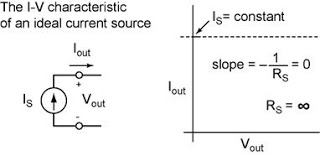
you may know that concept of ideal dependent sources , we will need a volt controlled current source to get a current-alike signal from a volt input signal (which what we want ), the figures below is about dependent current sources , we only need dependent current source to get an input-alike signal.
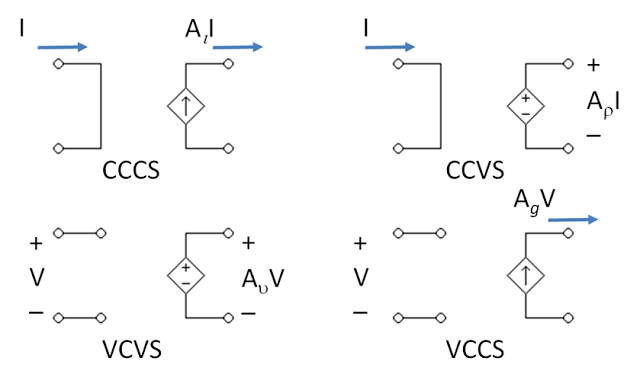
note for example VCCS has a current as in figure above = A*v which is already amplification by A but we need the output to be voltage so we pass this current through a resistor and take this volt drop as the output and this provides another amplification of R , see the following figure .

so now the output has a dc offset which is vs and amplification R*G*-1 .
we are so close now , so all we need is a practical implementation of the so called ideal VCCS .
lets remember the output characteristic of any transistor generally and for the mosfet specially .
the drain characteristics is a relation between the volt on the device Vds and the current through it Ids with several values of gate voltage Vgs .

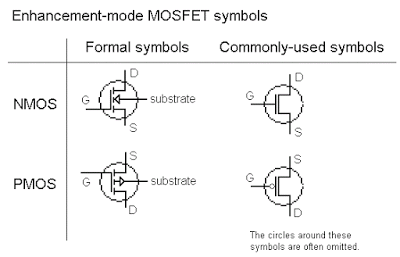
and here is the final step , the mos characteristics after the red line ” Saturation region” looks like the a current source as the current is nearly constant and the value of the current is controlled by the gate voltage so the mosfet in saturation and only in saturation is a VCCS .
now you should now why the mosfet works well as an amplifier , may be in other posts I will talk about mosfet in detail.
 Anas
Anas 
Leave a comment